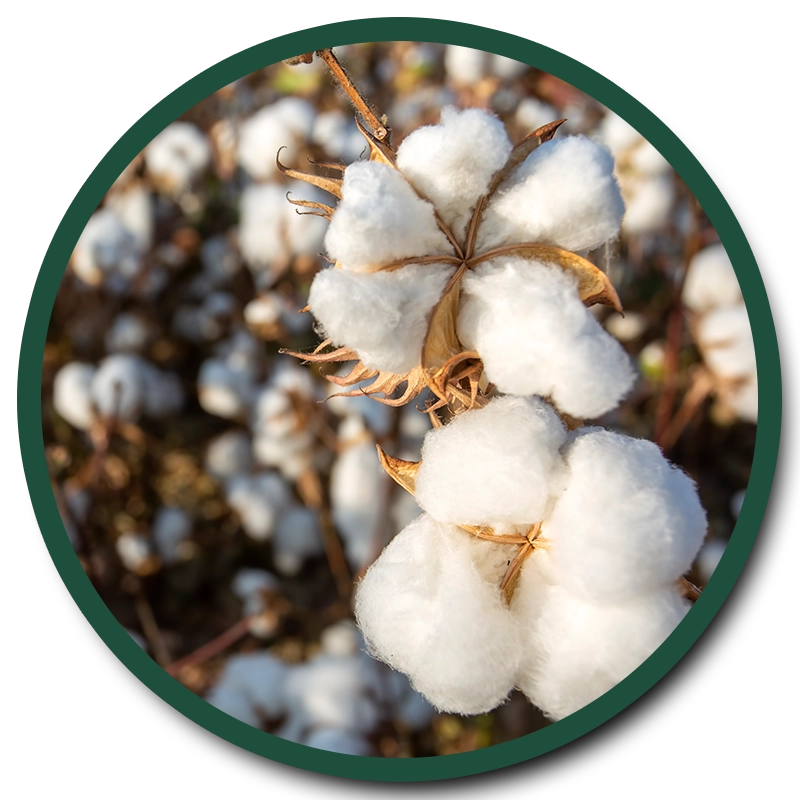
Premium Raw Cotton
India’s cotton sector is one of the most important agricultural industries in the country, employing over 60 million people across cultivation, ginning, pressing, and trade. India is the world’s second-largest producer and a leading exporter of raw cotton, with approximately 50–75 lakh bales exported annually to mills across China, Bangladesh, Vietnam, Indonesia, Pakistan, and Turkey.
Gujarat’s Shankar-6 variety — the dominant commercial cotton in Indian exports — is specifically valued for its medium-long staple length, consistent fibre uniformity, and ginning outturn (GOT) of 36%–40%, making it well-suited for weaving and knitting mills producing fine to medium count yarns. The Bunny and J-34 varieties from Gujarat and Punjab respectively offer slightly longer staples, targeting mills requiring superior fibre quality for premium fabric production.
Beyond raw cotton lint, cotton seed — a by-product of the ginning process — is a commercially valuable commodity in its own right, used for cottonseed oil extraction, cottonseed cake as a high-protein animal feed, and direct feeding to dairy cattle. We supply both ginned lint (pressed bales) and cotton seed, with all documentation required for import compliance in regulated textile and agri-processing markets.
Key Properties
- Natural Fiber
- High Tensile Strength
- Excellent Moisture Absorption
- Soft Texture
- Suitable for Spinning and Weaving
- Sustainable and Biodegradable
Raw Cotton Specifications
| Parameter | Specification |
|---|---|
| Appearance | White to Cream White Fiber |
| Fiber Type | Natural Cotton Fiber |
| Color Grade | As Per Customer Requirement |
| Staple Length | 28 mm - 36 mm (Depending on Variety) |
| Micronaire Value | 3.5 - 5.5 |
| Moisture Content | Max 8.5% |
| Trash Content | As Per Buyer Requirement |
| Foreign Matter | Nil to Minimal |
| Contamination | Free from Foreign Contaminants |
| Fiber Strength | Medium to High |
| Uniformity Index | Good to Excellent |
| Fiber Maturity | High |
| Ginning Process | Mechanically Ginned |
| Cleanliness | Export Grade |
Frequently Asked Questions for Raw Cotton Specifications
We specialize in exporting premium Indian varieties (like Shankar-6). They feature a superior staple length of 28mm to 32mm and a fiber strength profile ranging between 28 and 30 GPT.
Our raw cotton falls reliably into the premium commercial micronaire bracket of 3.5 to 4.9 NCL, ensuring smooth spinning performance and excellent dye absorption properties.
The cotton is compressed into high-density export bales weighing roughly 165 kg to 170 kg each. Every bale is tightly bound and fully wrapped in 100% protective cotton cloth or durable polymer sheeting.
We employ strict modern ginning line audits to keep the total trash and seed-coat fragment content safely under 2.5%, drastically reducing processing waste for textile spinners.
A standard 40ft HC container can be expertly loaded with approximately 160 to 170 highly compressed bales, yielding a total payload weight of roughly 26 to 27 Metric Tons.
Key Industries
-

Textile Manufacturing
The primary raw material for the global textile industry — natural softness, strength, breathability and fibre quality make it essential for apparel, home furnishings and technical textiles.
-
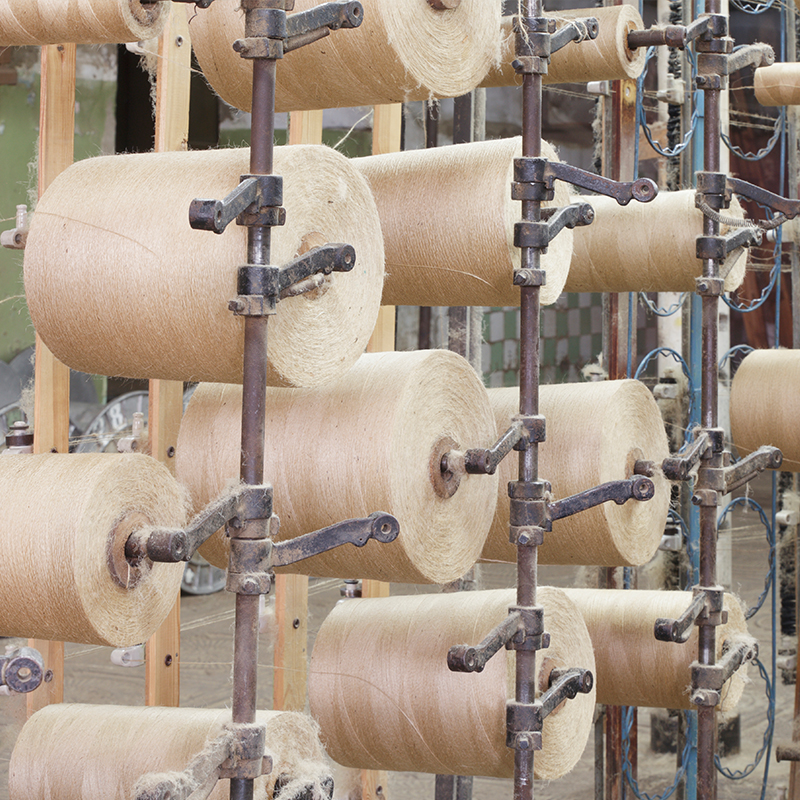
Yarn Production
Widely used by spinning mills for various yarn counts, with excellent spinnability, fibre strength and uniformity contributing to efficient, high-quality yarn output.
-
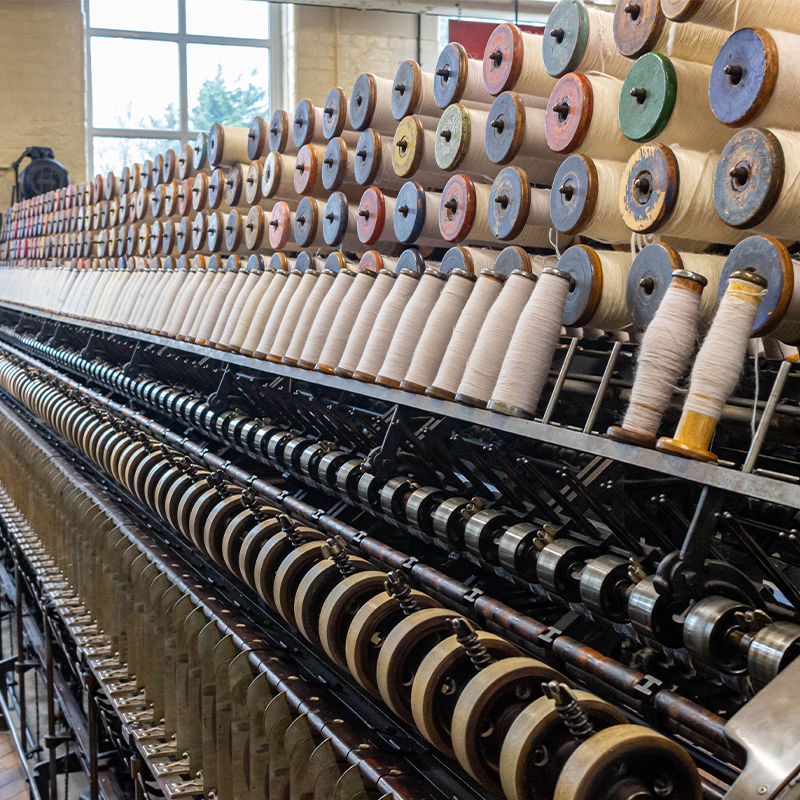
Fabric Processing
Used to manufacture woven, knitted, dyed, printed and finished fabrics, with effective dye absorption and fabric integrity for premium-quality textile materials.
-

Garment Manufacturing
Preferred for casual wear, formal apparel, children’s clothing, sportswear and workwear thanks to its breathability, comfort and versatility.
Download Product Brochure
Get the complete Raw Cotton data sheet, quality grades and packaging details in a single downloadable document for your procurement team.
Download Brochure