For years, the United States has been one of the most important destinations for Indian exporters.
From textiles and garments to engineering goods, pharmaceuticals, jewellery, chemicals and other manufactured products, American buyers have played a major role in India’s export story.
But 2026 is changing the way many Indian businesses think about international trade.
Tariff uncertainty, geopolitical tensions and changing trade policies are pushing exporters to ask a different question:
What happens if one market becomes more difficult?
The answer emerging from India’s export sector is increasingly clear:
Build more markets.
This doesn’t mean Indian exporters are abandoning the United States. The U.S. remains a major commercial partner and an important destination for Indian products.
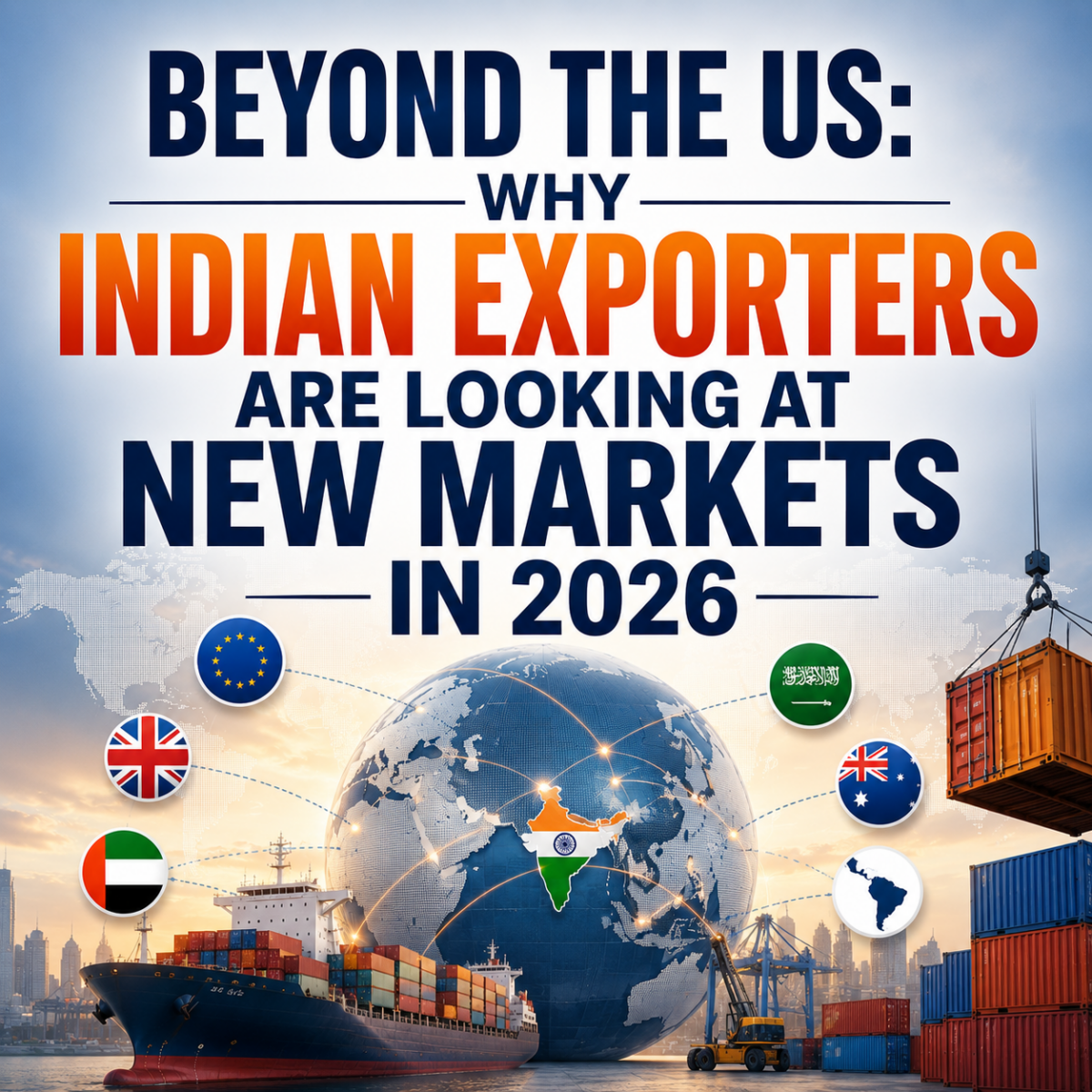
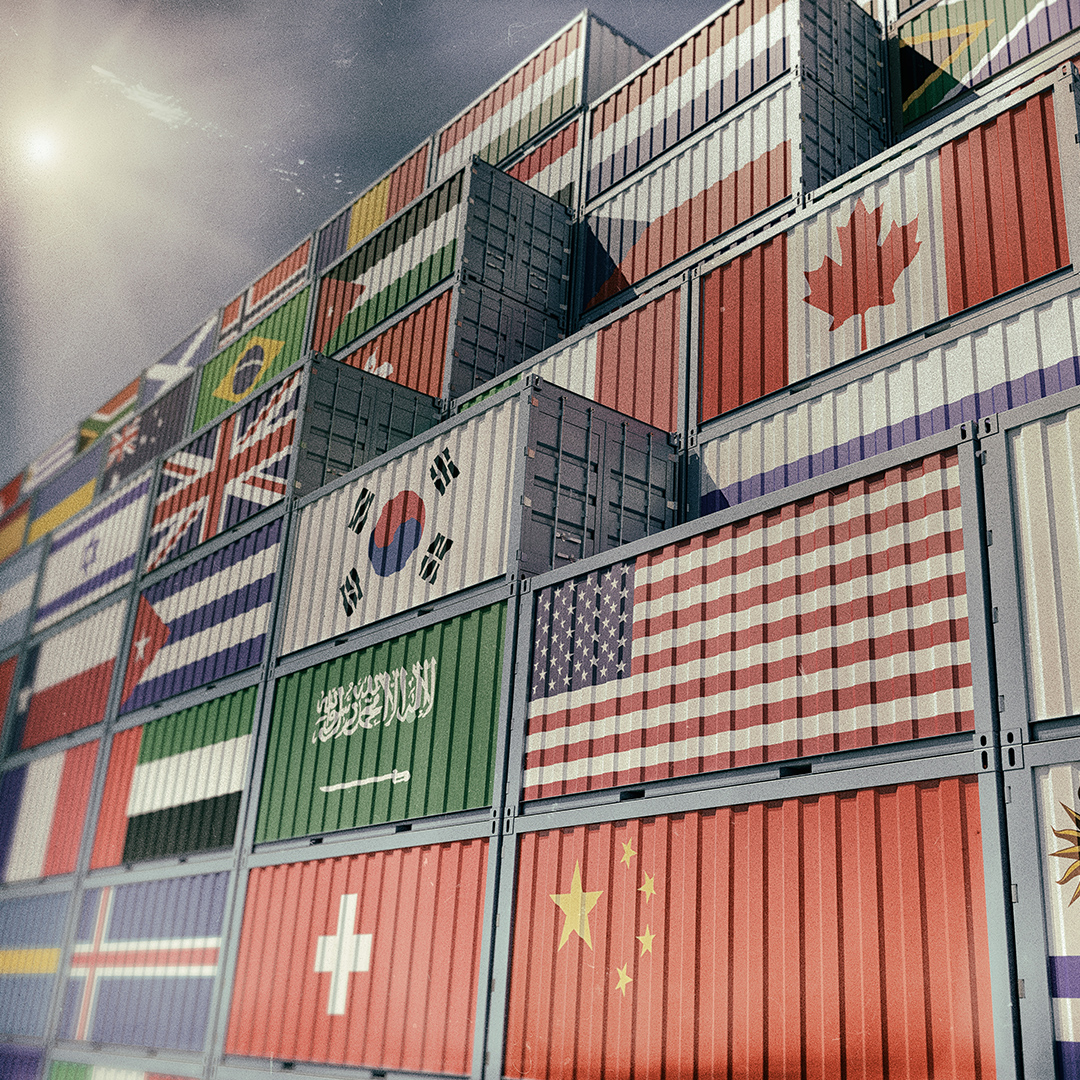
Instead, businesses are increasingly looking at Europe, the UK, the Middle East, Latin America, Australia, New Zealand and other markets as part of a more diversified export strategy.
And this shift is already visible in the market.
Why Export Diversification Has Become So Important
Exporting to one major market can be highly profitable.
It can also create concentration risk.
Imagine a manufacturer where 60–70% of international orders come from one country.
If tariffs increase, regulations change, consumer demand falls or geopolitical tensions affect trade, the impact can be immediate.
A diversified exporter has a different structure.
Instead of relying on one market, it may have:
- Buyers in the US
- Distributors in Europe
- Customers in the UK
- Trading partners in the UAE
- Buyers in Saudi Arabia
- Customers in Australia
- Emerging markets in Africa or Latin America
The individual markets may not all be equally large.
But together, they create resilience.
This is becoming particularly important in 2026 as trade policy becomes a bigger factor in international business decisions.
The US Is Still Important — But It Is Not the Only Market
India’s merchandise exports to the United States reached approximately US$87.3 billion in FY 2025–26, compared with US$86.5 billion in FY 2024–25. Despite tariff-related uncertainty, Indian exports to the US continued to grow.
That is important.
The story isn’t that the US market has suddenly become irrelevant.
It hasn’t.
Indian products continue to have strong demand in the United States, particularly in labour-intensive sectors where India remains competitive.
The more accurate story is that exporters are beginning to balance their exposure.
A company can continue selling to America while simultaneously building customers in Europe or the Middle East.
That is a much more realistic form of diversification.
A New $200 Billion Opportunity Is Being Discussed
A recent analysis has brought the diversification discussion into sharper focus.
Economist S.P. Sharma, speaking to ANI, said Indian exporters could potentially target around 15 alternative markets for products currently sold to the US.
He estimated that these markets together could represent approximately US$200 billion of potential demand for similar Indian products.
Markets mentioned include:
- Netherlands
- France
- United Kingdom
- Saudi Arabia
- United Arab Emirates
- Nepal
- Countries across Latin America
The estimate is an economist’s assessment, not a guaranteed export opportunity or an official government target. It is better understood as an indication of the scale of markets available if Indian exporters successfully diversify their customer base.
That distinction matters.
A $200 billion market does not mean India can immediately replace US exports with the same value elsewhere.
Market access, demand, competition, certifications, logistics and buyer relationships all take time.
But the opportunity is large enough to deserve attention.
Europe Is Emerging as One of the Biggest Alternatives
Europe is particularly interesting for Indian exporters in 2026.
India’s trade relationship with European markets has been gaining momentum through new trade arrangements and stronger supply-chain interest.
The European market also offers something exporters value:
diversification across multiple countries.
Selling into Europe doesn’t mean depending on a single country.
An Indian exporter can potentially build business across:
- Germany
- France
- Netherlands
- Italy
- Spain
- Poland
- Belgium
- Other European markets
This creates a broader customer base.
And there is already evidence that some Indian companies are moving in this direction.
A Real-World Example: Raymond Lifestyle
A recent Reuters report provides a useful example.
Indian apparel company Raymond Lifestyle said on 11 August 2026 that it expects Europe to account for approximately 20–25% of its exports within two years, up from around 17% before recent tariff disruptions.
At the same time, the company’s U.S. share is expected to decline from around 65% to approximately 55–60%.
The company reported that European enquiries had increased following recent India–UK and India–Europe trade developments, with new customers emerging in countries including the UK, Poland, Germany and France.
This is an important example because it shows what diversification looks like in practice.
The company isn’t saying:
“We are leaving America.”
It is saying:
“We want more than one major market.”
That is a very different strategy.
India–UK Trade Deal Adds Another Advantage
The United Kingdom has become particularly important for Indian exporters.
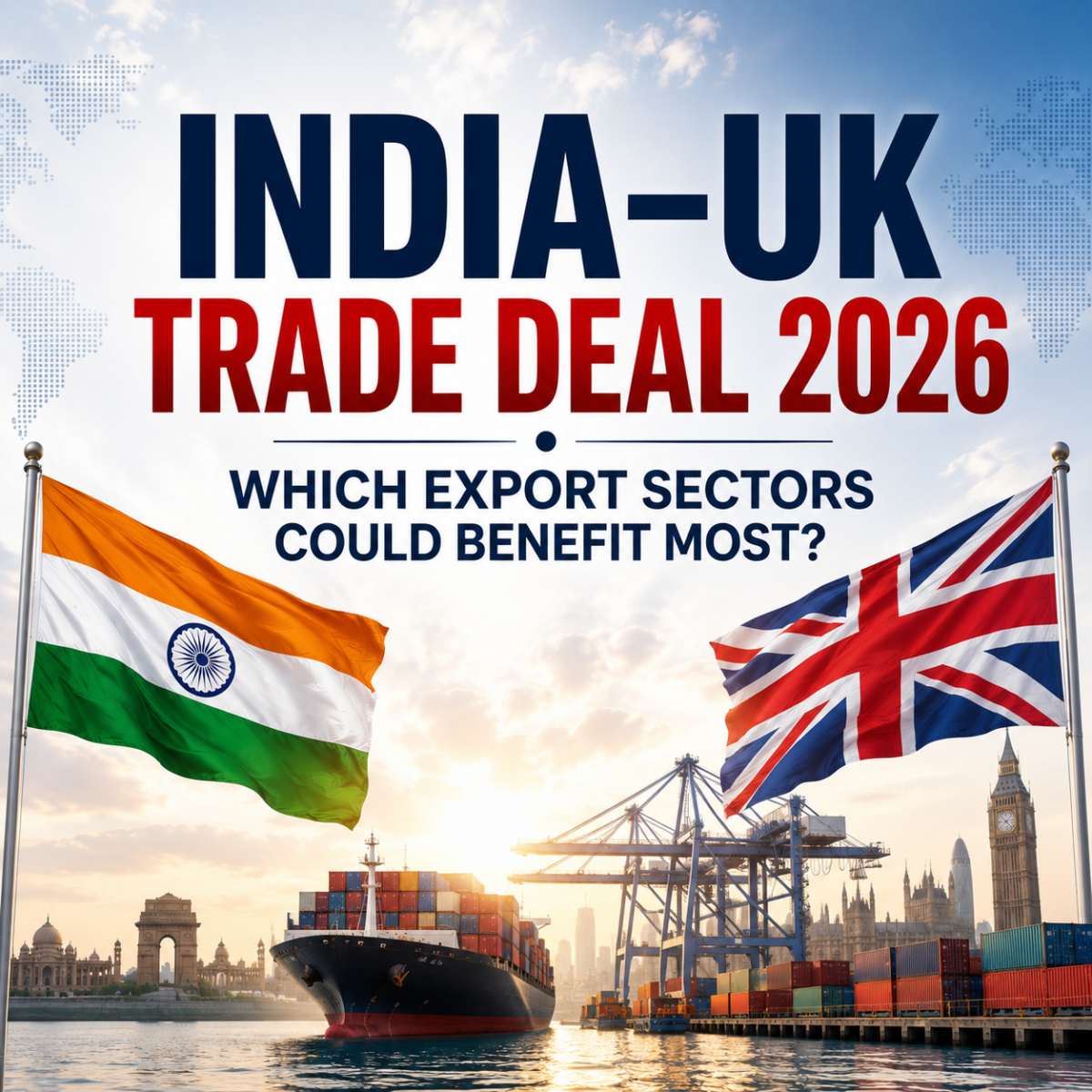
The India–UK Comprehensive Economic and Trade Agreement entered into force in July 2026 and provides preferential access covering nearly 99% of India’s exports to the UK, according to India’s Ministry of Commerce.
That creates opportunities across sectors such as:
- Textiles
- Apparel
- Leather
- Footwear
- Engineering products
- Pharmaceuticals
- Chemicals
- Gems and jewellery
- Processed foods
- Ceramics
- Auto components
For Indian exporters, the UK can therefore serve two purposes.
It is a market in its own right.
And it can also become a strategic gateway for businesses building stronger European relationships.
The Middle East Is Becoming More Important Too
The Middle East has long been an important destination for Indian exports.
But its role is evolving.
The region is not only a consumer market.
Countries such as the UAE and Saudi Arabia also function as major trading, logistics and re-export hubs.
For Indian exporters, this can create multiple opportunities.
A shipment to the UAE may ultimately reach customers across a wider region.
The UAE’s trade relationship with India has already demonstrated the potential of preferential trade agreements.
India’s Commerce Ministry has reported significant export diversification following the India-UAE CEPA, including an increase in the number of product lines exported.
For exporters looking at new markets, that is an important lesson:
A good export destination can also provide access to surrounding markets.
Saudi Arabia: More Than an Oil Market
Saudi Arabia is increasingly becoming relevant to Indian exporters beyond traditional commodity trade.
The country’s economic transformation is creating demand across:
- Construction
- Food
- Engineering
- Industrial products
- Consumer goods
- Healthcare
- Technology
- Infrastructure-related products
For Indian manufacturers, the opportunity is not necessarily about competing only on price.
The larger opportunity is to become a dependable supplier to a rapidly developing market.
That means exporters need to understand local distributors, procurement structures, certifications and payment practices.
Why the Netherlands Matters
The Netherlands may look like a relatively small market compared with the United States.
But from a logistics perspective, it is much more important than its population suggests.
The country is one of Europe’s major trade and logistics hubs.
For exporters, access to the Netherlands can potentially provide a route into broader European distribution networks.
That makes it particularly relevant for businesses selling:
- Industrial goods
- Chemicals
- Food products
- Machinery
- Textiles
- Consumer products
- Agricultural commodities
An exporter should therefore evaluate a country not only by its domestic demand.
Look at its role in the wider supply chain.
France and Germany Offer High-Value Opportunities
France and Germany are two markets that Indian exporters should watch closely.
Germany is particularly important for:
- Engineering
- Machinery
- Auto components
- Chemicals
- Industrial products
- Electronics
France offers opportunities across:
- Fashion
- Textiles
- Food
- Engineering
- Aerospace-related supply chains
- Consumer products
These are competitive markets.
European buyers often have strict expectations around quality, documentation, sustainability and delivery.
That can make entry more difficult.
But once an exporter establishes credibility, the customer relationship can become significantly more valuable.
Latin America Could Become the Next Frontier
Latin America is another region that deserves more attention.
Markets such as Brazil, Mexico, Chile, Colombia and Peru have large consumer bases and growing industrial demand.
Indian exporters already have experience in some of these markets, but there is room for deeper penetration.
Potential opportunities include:
- Pharmaceuticals
- Chemicals
- Machinery
- Automotive components
- Textiles
- Agricultural products
- Engineering goods
The challenge is logistics.
Long shipping distances, local regulations, language differences and distribution networks can make market entry more complex.
That means Latin America may be more suitable for exporters willing to build a long-term strategy rather than simply chase quick orders.
The Exporter Mindset Is Changing
The old approach to exporting was often:
Find one buyer → get repeat orders → keep supplying.
That model can work.
But in a volatile global environment, exporters increasingly need another layer:
Build a portfolio of markets.
For example, a manufacturer might have:
35% Europe
25% US
15% Middle East
10% UK
10% Asia
5% other markets
The exact numbers will depend on the business.
The point is not to create an artificial formula.
The point is to avoid allowing one destination to control the company’s entire international revenue.
Diversification Is Not Just About Geography
There is another mistake exporters can make.
They diversify countries but not customers.
Suppose a company sells to five countries but 70% of its total export revenue still comes from one large buyer.
That is not genuine diversification.
A stronger export strategy considers three levels:
Market Diversification
Sell across multiple countries.
Customer Diversification
Avoid excessive dependence on one buyer.
Product Diversification
Develop products for different market segments.
Together, these create a more resilient export business.
Trade Agreements Can Accelerate Diversification
Trade agreements can make this process easier.
Tariff reductions can improve the landed cost of Indian products.
But the real benefit is broader.
A trade agreement can give exporters a reason to approach buyers who previously considered Indian products less competitive.
India has been expanding its network of trade agreements and working to improve the utilisation of existing agreements.
Government documents show that India has signed multiple FTAs and PTAs and is encouraging exporters to make better use of preferential market access.
This means exporters should not treat an FTA as something only large corporations need to understand.
It can matter to an MSME selling a few containers a month just as much.
But Tariff Reduction Alone Won’t Create Buyers
This is where many export discussions become unrealistic.
Suppose a tariff falls from 10% to zero.
That is good news.
But if the exporter has:
- Poor packaging
- Slow response times
- Weak documentation
- Inconsistent quality
- No certifications
- Unreliable delivery
- No local distribution strategy
the tariff advantage may not be enough.
A buyer doesn’t purchase a product because it has zero duty.
The buyer purchases because the overall commercial proposition makes sense.
Price is one part of that equation.
What UK and European Buyers Are Looking For
For Indian exporters targeting Europe and the UK, expectations are becoming more sophisticated.
Buyers increasingly evaluate:
Quality Consistency
Can the exporter deliver the same specification every time?
Documentation
Are certificates, technical sheets, invoices and shipping documents accurate?
Traceability
Can the exporter explain where the product comes from and how it was produced?
Sustainability
Can the supplier meet the buyer’s environmental and social expectations?
Delivery Reliability
Can the exporter meet the agreed shipment schedule?
Communication
Does the supplier respond quickly and professionally?
These factors can determine whether an initial enquiry becomes a long-term account.
Why MSMEs Need to Pay Attention
Large exporters usually have teams for:
- International sales
- Compliance
- Logistics
- Finance
- Market research
- Legal documentation
Smaller exporters often don’t.
That can make diversification harder.
But digital tools are changing the equation.
A small Indian manufacturer can now:
- Research foreign buyers
- Analyse competitors
- Build multilingual catalogues
- Contact distributors
- Track enquiries
- Monitor trade data
- Compare tariffs
- Create professional product presentations
The technology is increasingly available.
The challenge is using it systematically.
A Practical Strategy for Indian Exporters
If you’re currently dependent on one major market, don’t try to enter ten new countries at once.
Start with three.
Step 1: Identify Your Best Alternative Markets
Look for countries already importing products similar to yours.
Step 2: Compare Tariffs
Check the applicable tariff and whether an FTA or preferential arrangement exists.
Step 3: Study Regulations
Determine the certifications, labelling and product standards required.
Step 4: Calculate Landed Cost
Don’t compare only your FOB price.
Understand freight, insurance, duty, taxes and local costs.
Step 5: Build a Buyer List
Target importers, distributors, manufacturers and wholesalers rather than sending generic messages to random companies.
Step 6: Test the Market
Start with small orders or trial shipments where commercially appropriate.
Step 7: Build Repeat Business
The goal is not simply to get one container order.
It is to create a reliable customer relationship.
What Could Go Wrong With Diversification?
Diversification sounds attractive, but it isn’t risk-free.
Entering a new market requires investment.
You may need:
- New certifications
- New packaging
- Local agents
- Product modifications
- Longer payment cycles
- Additional working capital
- Market-specific marketing
There is also a risk of spreading the sales team too thin.
A company chasing 15 countries without understanding any of them deeply may perform worse than a company focused on three well-selected markets.
So diversification should be strategic, not random.
The Biggest Opportunity May Be in Existing Products
One of the most interesting ideas from the current diversification discussion is that Indian exporters may not always need to invent new products.
They can often sell existing products to new markets.
If a company already exports successfully to the US, it has proof that:
- The product has international demand
- The manufacturing system works
- The company understands export logistics
- Quality standards can be maintained
The next step may simply be finding similar buyers elsewhere.
This can be much faster than developing an entirely new product.
What This Means for India’s Export Future
India’s record US$863.1 billion total exports in FY 2025–26 shows that the country’s export base is already broadening across goods and services.
The next stage may be about improving the quality of that growth.
More markets.
More products.
More buyers.
More value-added exports.
And stronger integration into global supply chains.
The recent diversification discussion suggests that Indian exporters have significant room to expand beyond traditional destinations.
But the opportunity will belong to businesses that are prepared.
The Real Lesson for Indian Exporters
The current global trade environment has made one thing clear:
Dependence is expensive. Diversification is a form of protection.
The United States will remain an important market for India.
Europe will matter.
The UK will matter.
The Middle East will matter.
Asia, Africa and Latin America will matter.
The winning strategy is unlikely to be choosing one over another.
It will be building a business that can operate across several markets and adapt when global trade conditions change.
For an Indian exporter, that means the question is no longer:
“Where can I sell my product?”
It is:
“How many strong international markets can I build for my product?”
That shift in mindset could become one of the defining features of Indian exports in 2026 and beyond.
Frequently Asked Questions
Why are Indian exporters looking beyond the US?
Tariff uncertainty and changing global trade policies have encouraged exporters to reduce excessive dependence on any single market. The goal is generally diversification rather than abandoning the US market.
Which alternative markets are being discussed?
Recent analysis has highlighted markets including the Netherlands, France, the UK, Saudi Arabia, the UAE, Nepal and countries in Latin America.
Is there really a $200 billion alternative export market?
Economist S.P. Sharma estimated that 15 alternative markets could represent around $200 billion of potential demand for products India currently exports to the US. This is an expert estimate, not an official government forecast or guaranteed market size.
Is India leaving the US export market?
No. The US remains a major destination for Indian merchandise exports. Diversification means building additional markets while maintaining viable existing business relationships.
Why is Europe becoming more attractive?
Recent India–Europe and India–UK trade developments can improve market access and competitiveness. Companies are also responding to changing global supply-chain strategies. Reuters reported increased European interest among Indian apparel exporters in August 2026.
Which Indian exporters can benefit from diversification?
Potential beneficiaries include manufacturers and traders across textiles, engineering, pharmaceuticals, chemicals, food products, agricultural commodities, jewellery, leather, machinery, auto components and other internationally traded goods.
Should a small exporter enter 15 countries at once?
No. A better approach is to identify a few markets where the product already has demand, compare tariffs and regulations, and test those markets before expanding further.
Conclusion
The global export market is becoming harder to predict.
Tariffs can change.
Trade agreements can create new advantages.
Shipping routes can be disrupted.
Consumer demand can move from one region to another.
For Indian exporters, the answer is not to stop competing.
It is to become more flexible.
The US can remain a major customer.
Europe can become a growth engine.
The UK can offer preferential access.
The Middle East can provide regional distribution opportunities.
And emerging markets can create the next wave of demand.
The companies that start building these relationships today may be in a much stronger position tomorrow.
India’s next export opportunity may not be in one country. It may be in the ability to sell the same Indian product successfully across the world.
Sources & References
1. The Times of India
2. The Economic Times / ANI
3. Reuters
4. Ministry of Commerce & Industry, Government of India
5. Ministry of Commerce & Industry, Government of India